

Depress ctrl and + keys together to increase text size; depress ctrl and – keys together to reduce
 dream police
I dreamed last night about dentists and about Sandy Downs. I still owe my dentist a little money from a missed appointment, so I need to pay that bill if I want people to pay what they owe me, and I need to watch my mouth in what I say, and there is the matter of the dentist who shot the lion in Zimbabwe. Sandy could mean a number of things, but she like churches and maybe today she means churches. So, let’s start this Sunday homily with a Facebook anti-religion post yesterday:


www.a-revolt.org : digital anarchy
Now let’s slide over to the dentist and the lion:

Lmfaoooooo

Here is a picture of Cecil the Lion being violent against his own that the media won’t show you. They want to always point fingers at dentists that kill lions, …
See More
Hmmmm, looks to me like lions behaving as they evolved, or were created, to behave. So, the dentist evolved, or was created, to pay rogue hunting guides $50,000 to bait a lion off a refuge, so the dentist could shoot and kill the lion, and then have its head mounted and its skin turned into a rug? That was Nature’s, or God’s, grand plan for the dentist? I wonder what the dentist’s sex life is like? If he has a sex life. Maybe after all the commotion he created, he can’t get it up any more. I read yesterday that Zimbabwe had initiated extradition and it already was on President Obama’s desk. I bet that’s a hot potato for Obama. His father was from Kenya. They have lions there, too.
Two syndicated Cecil the Lions columns in today’s Key West Citizen, which I then found online:
HARARE, Zimbabwe (AP) — Zimbabwe will seek the extradition of an American dentist who killed a lion that was lured out of a national park and caused international outrage, a Cabinet minister said Friday.
In the Zimbabwean government’s first official comment on the killing of Cecil the lion, the environment, water and climate minister lashed out at Walter James Palmer, accusing him even of trying to hurt Zimbabwe’s image.
“Unfortunately it was too late to apprehend the foreign poacher as he had already absconded to his country of origin,” Oppah Muchinguri told a news conference. “We are appealing to the responsible authorities for his extradition to Zimbabwe so that he be made accountable.”
On Tuesday, Palmer issued a statement saying he relied on his guides to ensure the hunt was legal. Two Zimbabweans — a professional hunter and a farm owner — have been arrested in the killing of the lion, an act which has garnered worldwide condemnation. Palmer has kept a low profile, but on Friday U.S. federal wildlife authorities said they have been contacted by a representative of the Minnesota dentist.
A State Department official told The Associated Press on Friday that, as far as the department knows, the United States has not extradited anyone to the Republic of Zimbabwe since the extradition treaty with the United States took effect in 2000. Nor has Zimbabwe extradited anyone to the United States, said the official, who was not authorized to address the issue by name and spoke on condition of anonymity.
The killing of Cecil gained global attention as the U.N. General Assembly unanimously adopted a resolution Thursday aimed at combatting illegal wildlife trafficking and poaching, the culmination of a two-year campaign led by Gabon and Germany.

“We very much welcome the decision by the General Assembly which will help in the protection of wildlife, of fauna and flora,” Stephane Dujarric, the spokesman for U.N. Secretary-General Ban Ki-moon said.
Palmer is believed to have shot the lion with a bow on July 1 outside Hwange National Park, after it was lured onto private land with a carcass of an animal laid out on a car, Zimbabwean conservationists have said. Some 40 hours later, the wounded cat was tracked down and Palmer allegedly killed it with a gun, they said.
“There has been an outcry,” Muchinguri said. “Almost 500,000 people are calling for his extradition and we need this support. We want him tried in Zimbabwe because he violated our laws.”
She did not explain the 500,000 but there are online petitions demanding Palmer’s extradition.
“I have already consulted with the authorities within the police force who are responsible for arresting the criminal. We have certain processes we have to follow,” Muchinguri said at the offices of the national parks and wildlife authority. “Police should take the first step to approach the prosecutor general who will approach the Americans. The processes have already started.”

She said both Palmer and professional hunter Theo Bronkhorst violated the Parks and Wildlife Act, which controls the use of bow and arrow hunting. She said Palmer, who reportedly paid $50,000 to hunt the lion, also violated the act through financing an illegal hunt. The landowner violated the act because he “allowed a hunt to be conducted without a quota and necessary permit,” Muchinguri said.
There is an extradition treaty between Zimbabwe and the United States.
The U.S. Embassy in Zimbabwe said Friday that it does not comment on extradition matters and the Zimbabwe Embassy in Washington said it had yet to receive instructions.
“We are trying other avenues,” said Richard Chibuwe, the deputy chief of mission at the embassy in Washington. “Seeking extradition would be the last resort.”
Muchinguri accused Palmer of “a well-orchestrated agenda which would tarnish the image of Zimbabwe and further strain the relationship between Zimbabwe and the USA.”

Zimbabwe and the United States have often sparred over the years. The southern African country has blamed its economic woes on U.S. sanctions against President Robert Mugabe and close associates, though many commentators have attributed Zimbabwe’s economic decline to mismanagement. Washington imposed the penalties on Zimbabwe because of human rights concerns. More broadly, Mugabe has long railed against what he calls Western meddling in Africa, saying it is an extension of the colonial rule of the past.
Authorities seeking Palmer’s extradition have described him as an accomplice to the illegal hunt. But they have not specified what charges might be laid against him, meaning it is unclear what penalty he could face if he is tried and convicted.
Bronkhorst was released on $1,000 bail after appearing in court in Hwange, about 435 miles (700 kilometers) west of the capital Harare, according to his defense lawyer, Givemore Muvhiringi.
If convicted, Bronkhorst faces up to 15 years in prison.
Palmer, 55, is a dentist in the Minneapolis suburb of Bloomington. In a note to his patients, he wrote: “I understand and respect that not everyone shares the same views on hunting.” He said he would resume his dental practice “as soon as possible.”

The lion’s head, which was severed by the hunters, has been confiscated by the wildlife authorities, according to Director of National Parks and Wildlife Edson Chidziya.
He added that there had been no reports so far of Cecil’s many cubs being killed by rival male lions, as often happens when the alpha male in a pride dies.
“We believe the cubs are still out there in the bush,” he said, adding that no rescue missions were planned.
____
AP writers Steven R. Hurst and Matthew Lee in Washington and Edith Lederer at the U.N. contributed to this report.
Posted: Saturday, August 1, 2015 3:45 pm | Updated: 4:15 pm, Sat Aug 1, 2015.
JOHANNESBURG (AP) — When Cecil the lion’s carcass was finally found after he was lured out of a Zimbabwe wildlife reserve to be killed by an American hunter, it was a headless, skinless skeleton the vultures had been picking at for about a week.
Conservationists decided the most natural thing was to leave the bones where they were for hyenas to finish off, said Brent Stapelkamp, a lion researcher and part of a team that had tracked and studied Cecil for nine years.
Stapelkamp darted Cecil and put his last GPS collar on in October. He was probably the last person to get up close before Minnesota dentist Walter Palmer used a bow and a gun to kill the now-famous lion with the bushy black mane, its head and skin eventually cut off as trophies. Stapelkamp had first alerted authorities that something might be wrong after Cecil’s GPS collar stopped sending a signal.
The killing of the big cat in early July has unleashed global outrage, sending Palmer into hiding back home in suburban Minneapolis, leading to the arrest of the local hunter he employed, and prompting Zimbabwe’s environment minister to say the southern African country would seek Palmer’s extradition to face charges.
Stapelkamp shares the anger, not just because of the demise of Cecil. Also because, he said, it’s not the first time a lion has been killed illegally around Hwange National Park in northwestern Zimbabwe, a reserve known for its rich wildlife. About a dozen lions in the region were killed illegally in recent years, Stapelkamp said, and no one was caught.
“I think this was just the final straw,” Stapelkamp told The Associated Press in a phone interview from the Hwange reserve. “Everyone locally just thought, no ways, we’re not letting anyone get away with this anymore.”
Cecil had an intriguing story, making him a celebrity in Hwange. He arrived as a kind of lion refugee, alone and wandering after being displaced from another territory. Cecil befriended another male lion, Jericho, and together they grew and watched over two prides, one with three lionesses and seven cubs and another with three lionesses.
The satellite collar on Jericho has been sending normal signals, indicating the lion is alive and moving around, Stapelkamp said.
But Cecil’s killing will have an impact on the area, explained Stapelkamp, a field researcher for an Oxford University study on lions.
Jericho may not be able to hold their territory alone and could be chased away by rival lions. Unprotected, the lionesses and cubs would then be under threat and also move away or be killed. Safari operators who invested millions of dollars in the area would lose one of their biggest attractions for tourists.
“They’re burning fire breaks. They’re grading roads. They’re pumping water,” Stapelkamp said. “They’re spending a lot of money in the management of lions and then someone just draws it across the railway lines having not paid a penny in its management and shoots it and runs away with its skin. It’s unacceptable.”
Zimbabwe’s National Parks and Wildlife Authority said Saturday it has suspended the hunting of lions, leopards and elephants outside of Hwange National Park, and that bow and arrow hunts have also been suspended unless they are approved by the authority’s director.
The authority also said it is investigating the killing of another lion in April that may have been illegal.
Stapelkamp, unsure of the details of Cecil’s killing, described the usual tactics of hunters to draw an animal onto private land and out of the park where it is protected. The two areas are separated by a railway line. Hunters shoot a zebra or giraffe and hang it on a tree; the main bait. They then drag the intestines of that animal, “something that really smells,” Stapelkamp said, up and down the park boundary behind a vehicle. Sometimes they’ll even play the sounds of a dying buffalo over a loudspeaker to attract a lion.
The lion “comes across that scent trail and it leads him straight to this bait,” Stapelkamp said. “It rushes in for a free meal and they’re waiting … and they kill him like that.”
Even on private land, this hunt was still illegal, Stapelkamp said, because no hunting quotas for lions were issued in the region this year. Legal hunts do happen, he said, but only after authorities consult with ecologists and decide that it won’t adversely affect the area.
This didn’t happen with Cecil, Stapelkamp said, and he doesn’t believe Palmer’s story that he trusted his professional guide to ensure a legal hunt.
“He’s a well-educated man, he’s got a lot of resources,” Stapelkamp said. “You could do your homework. Due diligence. You would know that you’re hunting in a controversial area. You’ve got a GPS you could have in your pocket and you have a look at the map, and you say, ‘listen, friend, I think we’re in the wrong area.’ There’s no excuse.”
Palmer came “with the intention of getting the biggest lion that he could and getting out. And he got caught,” Stapelkamp said.
© 2015 The Associated Press. All rights reserved. This material may not be published, broadcast, rewritten or redistributed.
I spontaneously lived this experience below in another realm, in early June 1995:

something about lions …
Once upon a time there lived a woman named Alya. She was the medicine woman in her tribe, using herbs and poultices and spirit ways to help her people. Yet she had one flaw: she hated lions, because a lion had killed her father. Her hatred caused her to cast spells against lions, which caused her husband great concern. He often told Alya that her war with lions was going to get her into big trouble, but she was a medicine woman, she knew the ways of the spirits, and she did not listen to her husband. One day while Alya was out gathering herbs, she spotted a lion sunning himself in tall grasses on the savannah. She hatched a scheme in her mind to sneak up on the lion and cast a spell on him, which would enable her to steal his spirit and have it for herself. As she crept closer to the lion, she began chanting softly and seeing in her mind’s eye her spell taking over the lion. However, she was so focused on what she was doing, that she did not see in her mind’s eye the lion’s mate returning from hunting. Nor did she see the lioness catch her sent, drop her kill from her mouth to the ground, and circle around behind. Too late, Alya realized her peril, just as the lioness took her from behind. Next thing Alya knows, she is in the spirit world, standing before the Lion Spirit. Trembling with terror, Alya wants to run away, but the Lion Spirit speaks to her heart, says, “There is something you do not yet know.” Then Alya is back on the savannah, watching a hunter from her tribe sneaking up on a nest of lion cubs, whose parents are away hunting. The hunter has a twisted spirit, and decides to kill the lion cubs just for the fun of doing it, even though killing any animal just for sport is taboo in his tribe, which worships the Lion Spirit. On returning to his village, the hunter tells no one what he has done. When the lion and lioness return to their nest and find their dead cubs, they are enraged. They catch the hunter’s scent and track him back to the edge of the village, where the lion hides in a thicket and begins roaring and bellowing out his rage over what has happened. The hunter knows why the lion is there, doing that, but still he tells no one. Alya’s father, the tribe’s leader, prepares to go out and face and kill the lion, because it his duty to protect his tribe from marauding lions. And so he sets out to face the lion, even as the hunter lets him go without saying what has happened to bring this about, and that a lioness is also out there with the lion. Alya’s father quickly finds and confronts the lion, and is preparing to kill it with his spear, when he is taken from behind by the lioness. In her horror, Alya helplessly watches on, even as she now realizes that her hatred of lions was completely misplaced. She feels awful. Then suddenly she is back on the savannah, stalking the lion whose spirit she once wanted to steal for herself. The lion looks up, stares into Alya’s eyes. She shakes all over, is terrified, but does not look away. Then something takes hold of her, she says to the lion, “I have lost my father and you have lost your cubs. I will be your cub.” The lion looks deep into Alya’s spirit, nods, says, “And I will be your father, and will always protect your front.” Then beside the lion is the lioness, who says to Alya, “And I will always protect your back.”
Vicious van dweller criminal lion lover Victor dropped this into my Facebook account:

“My Sentiments exactly”
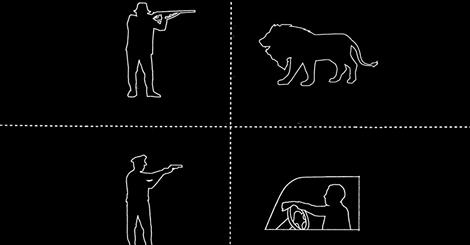
I found myself thinking yesterday of Key West’s model cop Gary Lee Lovette,
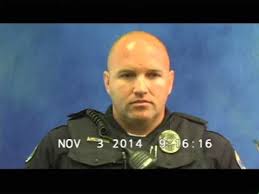
who was record on his own taser video recorder of saying we (Gary Lee and other Key West police officers) had killed (suspected vicious van dweller criminal) Charles Eimers, we murdered him, and how that was dealt with was Chief of Police Donie Lee suspended Gary Lee five days without pay, for boasting, exaggerating, and nothing else was done, and the city manager and city mayor and city commissioners let it slide, and the Florida Department of Law Enforcement let it slide, and State Attorney Catherine Vogel let it slide, and then city hall, or somebody, started putting out bumper stickers saying we support our cops, and now we know what Key West wants in police officers.
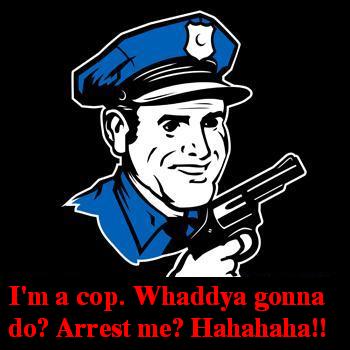
Meanwhile, living rough, sleeping nights at KOTS, Key West’s homeless shelter, hanging out in public parks and the county library during the day, after I publish each day’s howling at goodmorningkeywest.com, has sort of killed my almost nil anyway social life and my admittedly feeble interest into fitting into society, resulting in shaving in cold water showers became a bit more than I cared to do, so I stopped shaving; besides, having a beard again and wearing a baseball hat will protect most of my face from the sun, which its really beating down during these dog days of August.

sloanbashinsky@outlook.com
